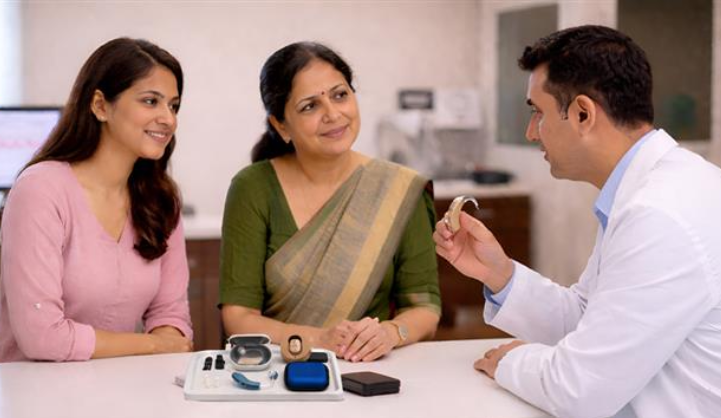

It often begins in the smallest ways. A word missed in a busy restaurant. The television volume nudging up just one notch higher than it used to be. You might find yourself smiling politely and nodding during a conversation, all while silently guessing what was said. For most people, these moments are easy to brush off. Life is fast, schedules are demanding, and a hearing test feels like just another appointment to squeeze into a calendar that is already bursting at the seams.
The hesitation to book an appointment rarely comes from a lack of concern. It stems from the unknown. People worry about the time commitment, the potential for clinical discomfort, or perhaps the weight of what the results might reveal. But ignoring these subtle shifts in sound carries a heavy invisible cost. Conversations become exhausting rather than enjoyable. Social gatherings start to feel like a chore. Over time, even the most resilient relationships can feel the strain of “never mind, it wasn’t important” or “please, just repeat that one more time.”
The reality is that a hearing test is one of the simplest, most non-invasive health checks available. At RISE Hearing Aid Centre, we focus on clarity over clinical coldness. We believe that an hour of your time is a fair trade for the confidence that comes with knowing exactly where you stand.
Understanding The Standard Hearing Test
A hearing test is not a single step. It is a series of small, structured checks that together give a clear picture of how well someone hears across different sounds and situations. The goal is simple. To understand what a person hears, what they might be missing, and why.
Today, modern audiology uses precise tools that make testing incredibly accurate without making it complicated for the patient. Most people are surprised by how relaxed the experience feels. Surprisingly, it is often the most quiet, peaceful hour of their week.
How Long Does A Hearing Test Take?
Most standard hearing tests take around 45 to 60 minutes.
This hour covers the entire journey, from our first conversation to a detailed explanation of your results. If your hearing concerns are straightforward, we might even finish sooner. For more complex cases involving tinnitus or significant history, we may take a few extra minutes to ensure we haven’t missed a detail. Think of it this way: sixty minutes of your afternoon can provide answers to questions you may have been carrying for years.
What Happens During A Hearing Test?
Many people imagine heavy machinery or a cold, clinical setup. The reality is much more approachable. Each step has a specific purpose, and none of them involve any discomfort.
1. Health and Hearing History
A hearing test does not begin with machines. The session usually opens with a relaxed conversation about your day-to-day hearing experience. The audiologist will ask where you notice difficulty, maybe in a crowded café, during phone calls, or while watching television. They will also look into your work environment, past exposure to loud noise, medical history, and even family patterns of hearing loss.
This step shapes everything that follows. Two people can have similar symptoms but very different underlying causes. You might even find yourself recalling small moments you had overlooked before. That insight helps create a more accurate and personalised assessment.
2. Physical Ear Examination
Next comes a quick check of the ear canal using a small lighted instrument called an otoscope.
This step looks for:
- Earwax buildup
- Signs of infection or irritation
- Structural issues in the ear
It takes just a few minutes and is completely painless. In some cases, something as simple as excess earwax could be affecting hearing, which means the solution could be straightforward.
3. Pure-Tone Hearing Test
This is the part most people associate with a hearing test.
You will sit in a quiet room, wearing headphones. Sounds of different pitches and volumes are played, one ear at a time. Each time you hear a sound, you respond, usually by pressing a button or raising your hand.
The purpose is to find the softest sound you can hear across different frequencies.
The result is plotted and recorded on a graph called an audiogram, which gives a visual map of your hearing ability. While it may sound technical, the experience itself is calm and easy, just listening and responding.
4. Speech and Word Recognition Test
Hearing is not only about detecting sound. It is also about understanding speech. In this part, you will be asked to repeat words played at different volumes. Sometimes the words are presented with background noise to simulate real-life environments. This helps answer an important question: Can you hear speech clearly, especially in noisy places? Many people realise here that their difficulty is not about volume alone, but clarity.
5. Results and Discussion
This is often the most valuable part of the entire session.
The audiologist explains the results in simple terms. No complex jargon, just a clear understanding of what is happening with your hearing.
This is where everything comes together.
The audiologist will walk you through your results in clear, simple language. No complex terms, just a practical explanation of what is happening with your hearing.
You might learn:
- Whether your hearing falls within a normal range
- If there is mild, moderate, or severe hearing loss
- What frequencies are affected
- Possible next steps
At RISE Hearing Aid Centre, this discussion is never rushed. The focus is on helping you fully understand your hearing, so you leave not just with answers, but with confidence about what to do next.
Factors That May Extend Your Hearing Test Duration
While most tests fit comfortably within an hour, certain factors can extend the duration slightly.
Lengthy Medical History
If someone has a complex health background, more time may be needed to understand it properly. This ensures the testing approach is accurate.
Multiple Hearing Concerns
Some people experience different types of hearing issues, such as difficulty in noise and occasional ringing in the ears. Each concern may require separate evaluation.
Severe Hearing Loss
In cases of advanced hearing loss, additional checks may be needed to assess the extent and nature of the condition.
Additional Diagnostic Tests
Sometimes, the audiologist may recommend further testing, such as middle ear analysis or specialised assessments. These are not always necessary, but when they are, they help provide a more complete picture.
The truth is, even when the test takes longer, it is time well spent.
Understanding Your Audiogram Results
An audiogram might look like a chart full of lines and symbols, but it tells a clear story once explained.
On one axis, you have frequency, which ranges from low-pitched sounds like a drum to high-pitched sounds like a whistle. On the other, you have volume, from very soft to loud. Each point on the chart represents the softest sound you can hear at a particular frequency. If the marks fall within a certain range, hearing is considered normal. If they fall outside, it indicates hearing loss at those frequencies.
What makes this useful is how specific it is. For example, someone might hear low tones well but struggle with high-pitched sounds like children’s voices or certain consonants in speech. That is why conversations may feel unclear even if volume seems fine. An audiogram brings clarity to these patterns.
How Often Should Someone Get A Hearing Test?
This is one of those questions people often think about but rarely act on. For adults with no noticeable hearing concerns, getting a hearing test once every few years is usually enough. It works as a baseline, helping track any gradual changes over time. However, some situations call for more regular check-ups.
You may need more frequent testing if you:
- Are over the age of 50
- Work in or are often exposed to loud environments
- Have started noticing difficulty in conversations or clarity
- Already use hearing aids or have a diagnosed hearing condition
The truth is, hearing changes slowly, which makes it easy to ignore. But small shifts can build up over time. If you have ever caught yourself wondering, “Do I need a hearing test?”, that is often your first sign. Checking early makes everything simpler. It opens the door to easier solutions, better hearing support, and a more comfortable everyday life.
Does A Hearing Test Hurt?
This is one of the biggest concerns, especially for first-time visitors. The answer is straightforward. No, a hearing test does not hurt. There are no needles, no invasive procedures, and no discomfort. Most of the time, you are simply listening and responding. Some people even describe it as calming, since parts of the test happen in a quiet, controlled environment.
What Happens After Your Hearing Evaluation?
The next steps depend entirely on your results. If your hearing is normal, that itself is valuable reassurance. You may simply be advised to monitor your hearing over time.
If there is some level of hearing loss, the audiologist will guide you through options. This might include:
- Lifestyle adjustments to protect hearing
- Medical referrals if needed
- Hearing aids, if appropriate
At RISE Hearing Aid Centre, the approach is not about pushing solutions. It is about finding what genuinely fits your life. For some, that may mean immediate support. For others, it may mean simply understanding their hearing better and taking preventive steps.
A Question Worth Asking Yourself
Many people delay hearing tests because they expect them to be complicated or time-consuming. But when the answer to “how long does a hearing test take” is simply under an hour, it changes the perspective. One hour can restore clarity in conversations. It can reduce daily frustration. It can reconnect moments that felt distant.
If hearing has felt different lately, even in small ways, it might be worth setting aside that hour. RISE Hearing Aid Center is there to make that step easy, comfortable, and genuinely helpful. Sometimes, taking care of your hearing is not about fixing a problem. It is about giving yourself the chance to hear life a little more clearly again.